No. 1 Engines – Boulton and Watt 1812
This is the oldest working beam engine in the world still in its original location and capable of performing its original task – pumping canal water up 12 metres (40 feet) from Crofton’s springs and reservoir to keep the summit pound of the Kennet and Avon Canal at the top of the Crofton flight of locks topped up with water.
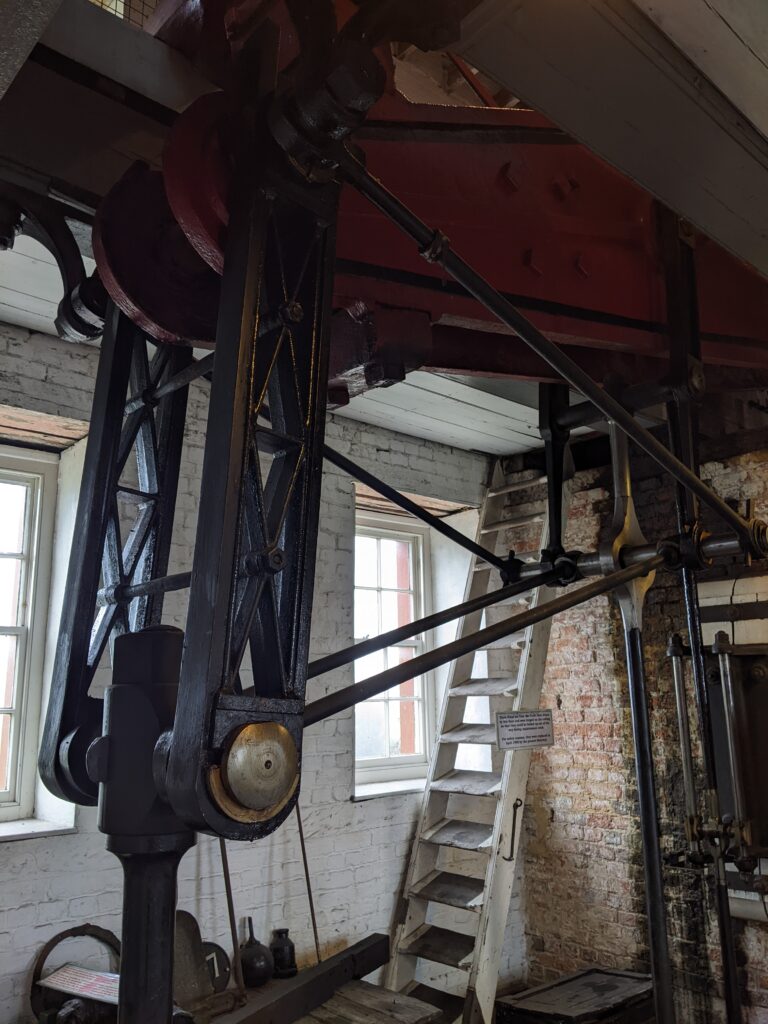
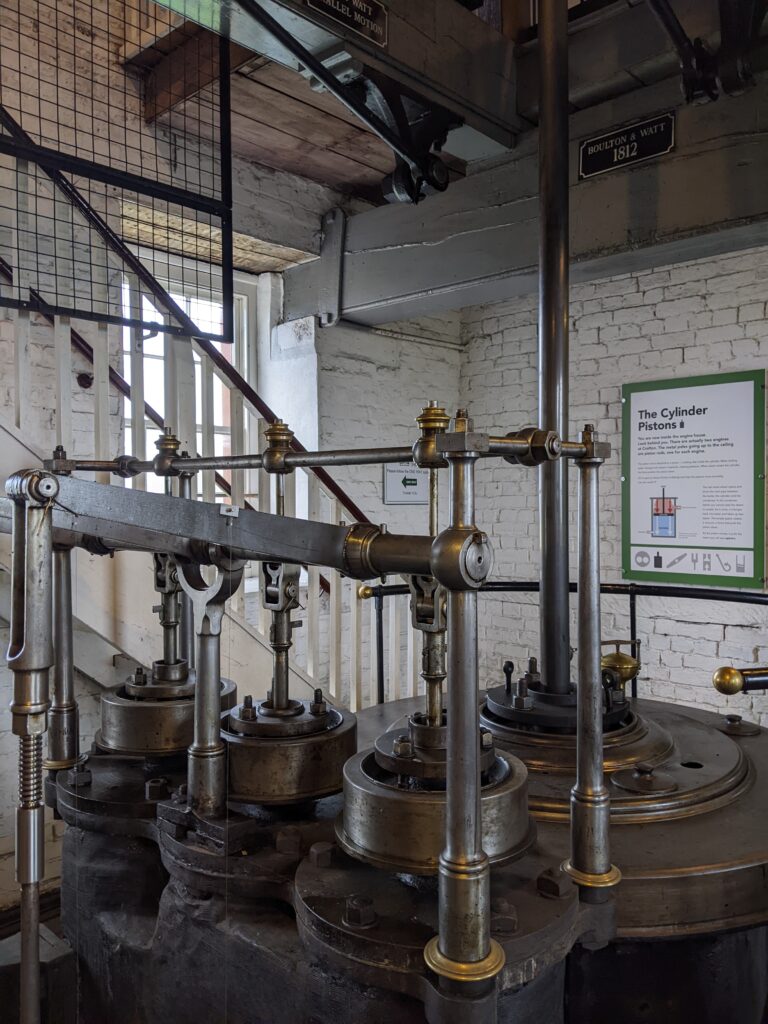
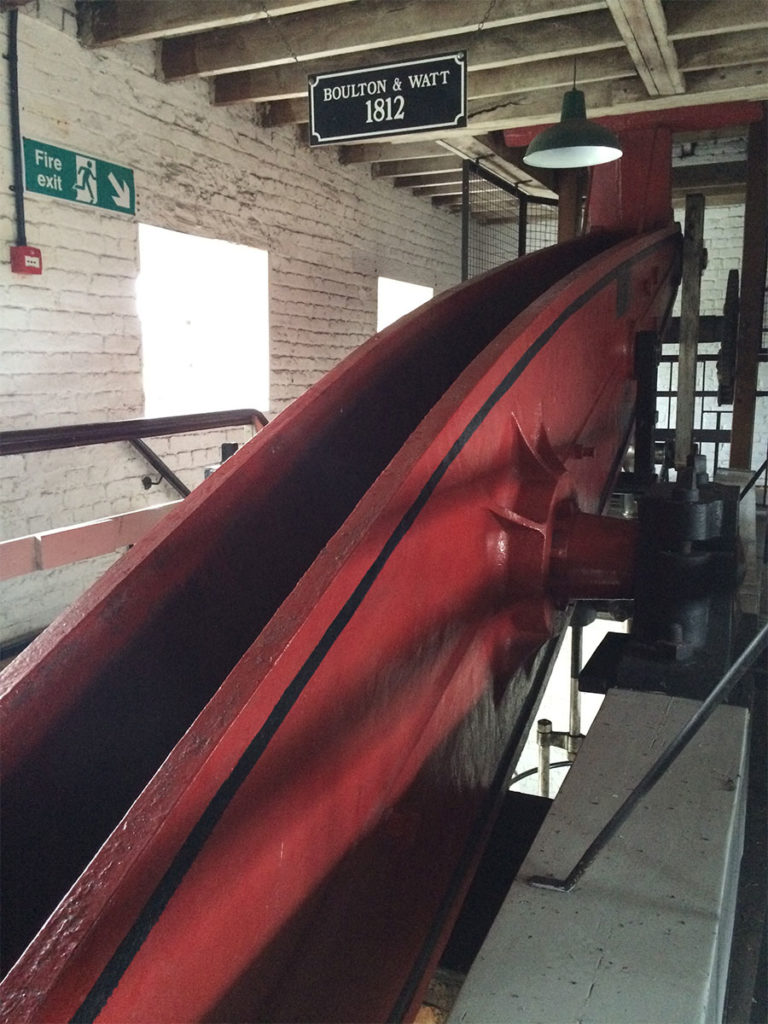
The No 1 Engine was ordered in 1810 and was installed and working by 1812 at a cost of £2,244. It has a 1.073 m (42.25 inch) diameter steam piston, and a 2.1 m (7ft) stroke and has a cast iron beam 8 m (26 feet) long weighing some 6 tonnes. The engine is of typical Boulton and Watt design with parallel motion linkages at each end of the beam, and a separate condenser.
The side of the No 1 engine beam displays a marking “B.42”. This is the Boulton and Watt order book reference. The order books are lodged in the Boulton and Watt archive in the Birmingham City Library which contain reference to this engine being purchased by the Kennet and Avon Canal Company.
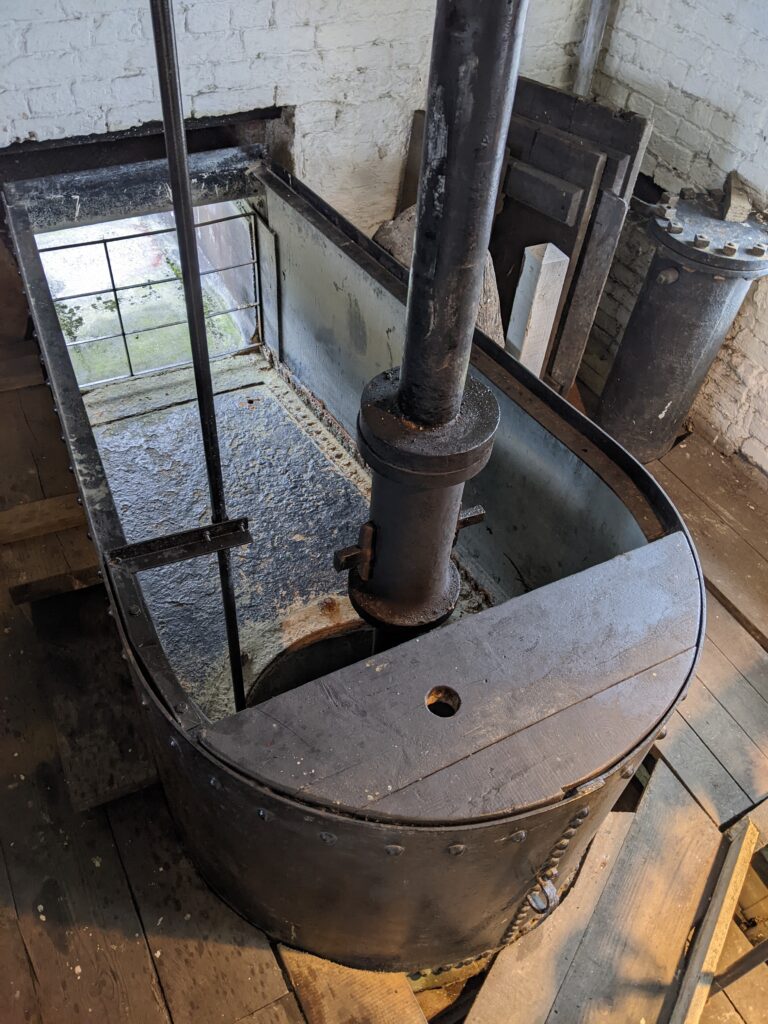
The engine works a 76 cm (30 inch) diameter lift pump which raises the water on the power stroke of the engine. The column of water is lifted by a pump piston in the rising main by an amount equal to the stroke at the top. The piston has a series of concentric rings which lift to let the water through on the return stroke of the pump. The original Boulton and Watt valves were replaced by Harvey & West patent double beat valves in 1845 and then by the present Pernis valves in 1917.
It pumps water at a rate of 11 strokes per minute, 1054 litres (232 gallons) per stroke. It is estimated that a lock full of water can be moved in approximately 15 minutes.
In 1844 The No.1 engine was rebuilt as a high-pressure Cornish type engine working at 138 kPa (20psi) to improve its efficiency. Some parts were replaced, but many components date back to 1812. Its Indicated Power is 38 hp (29 kw). The vacuum is -91 kPa (27 inches Hg). Its efficiency is 1.8%.

No.1 Engine (Boulton & Watt 1812) and Pump – Key Data
| Engine | Bore | 107cm / 42inches |
| Stroke | 2.1m / 7ft | |
| Strokes/min | 11 | |
| Cylinder capacity | 1900 litres / 67 cu ft | |
| Steam pressure | 1.4 bar / 20 psi | |
| Vacuum | 0.9 bar / 26 inches Hg | |
| Beam weight | 6 tonnes | |
| Date built | 1812 | |
| Cost at the time | £2,244 |
| Pump | Bore | 76cm / 30 inches |
| Stroke | 2.4m / 8ft | |
| Lift | 12m / 40ft | |
| Type | lift | |
| Water Volume per stroke | 1100 litres / 245 gall 1.1 tonnes |